Precision in Measurement: Exploring the Role of 3 Axis Force Sensor Technology
In modern engineering and robotics, precise measurement of forces is critical for performance, safety, and innovation. Among the advanced sensing technologies, the 3 axis Force Sensor plays a vital role in delivering accurate multi-directional force data. This type of sensor is designed to measure forces simultaneously along three perpendicular axes, typically X, Y, and Z. Unlike single-axis sensors that are limited to detecting force in one direction, a three-axis system provides a complete picture of the forces acting on a structure or component, making it essential for research, automation, and testing industries.
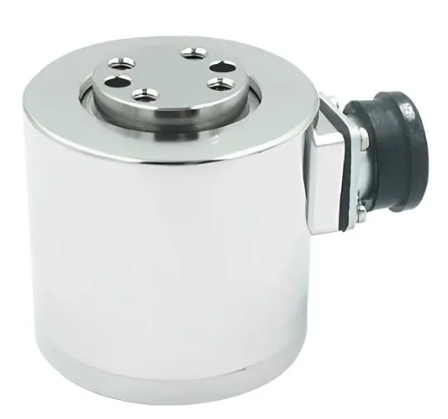
One of the primary applications of these sensors is in robotics, where they enhance dexterity and responsiveness. By detecting forces in multiple directions, robots can perform delicate tasks such as assembly, surgical procedures, or handling fragile objects. In aerospace and automotive industries, they are crucial for structural testing, where precise force measurement ensures reliability and safety. Similarly, in biomechanics, they assist in analyzing human motion by capturing forces applied during walking, running, or rehabilitation exercises.
A significant advantage of a 3 axis model is its compact design that integrates multiple sensing elements into a single unit, reducing space while maintaining accuracy. Engineers often rely on these sensors during material testing, where understanding multi-directional loads helps in designing stronger and more efficient components. Additionally, they are frequently used in manufacturing processes to monitor machining forces, ensuring precision and preventing tool wear.
While three-axis sensors are highly effective, industries with more complex requirements sometimes use 6 Axis Force Sensors, which can measure both forces and moments. However, for most applications requiring force-only data, the three-axis variant provides the perfect balance between performance, cost, and simplicity.
Another key feature of these sensors is their ability to deliver real-time data, often integrated with digital systems for monitoring and analysis. Modern versions come equipped with high sensitivity, low noise, and robust construction, allowing them to withstand harsh environments while maintaining accuracy. This makes them suitable for industries such as defense, aerospace, and heavy machinery.
Looking ahead, the demand for three-axis sensing technology is expected to grow as industries increasingly rely on automation, robotics, and data-driven systems. With advancements in sensor design, we can anticipate improvements in miniaturization, wireless integration, and AI-based analysis, which will make these sensors even more powerful and versatile.
For More Info:-

Comments
Post a Comment